

Why did I decide to build another to-do list app, Todoit?
The word “another” is there for a reason — there really are hundreds of them on the market. But where there is a huge supply, there is also huge and stable demand.
The idea was simple: to build a task manager that actually helps me quickly create and manage tasks — not a huge machine that I need to manage itself.
Of course, at first I thought: “I’ll build it in a week, remove everything unnecessary, and that’s it.”
But it turned out to be completely different.
Building a simple to-do list with the key functionality was much harder than I expected. There were so many logic problems to solve and fit into a minimal, intuitive flow.
In short, I spent a month on it almost without looking up.
At some point, I simply stopped at a minimal MVP because I honestly had no mental energy left to keep polishing it further.
Making something functional, clear, and simple at the same time is one of the hardest tasks.
That’s my personal view as the maker — but you can judge it for yourself. Feedback is super valuable.
Here is a simple example from Asodesk, showing App Store trending searches:
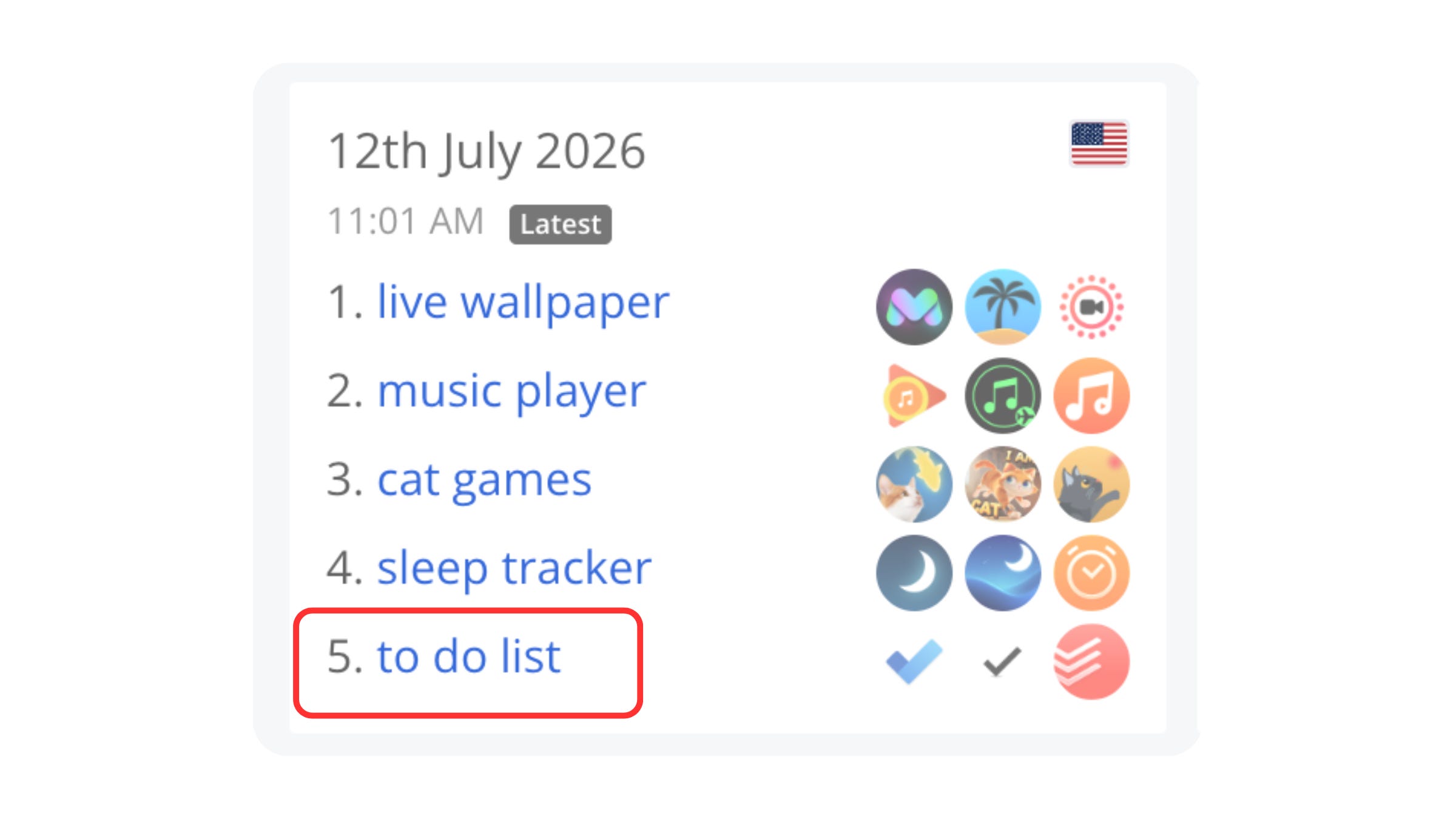
So that answers the demand question.
The second topic — and actually the main one — is focus.
I’ll be honest: even though I’ve always talked about the “one product” approach, I almost slipped into spray and pray mode myself. But I stopped in time.
Yes, Todoit is my second app. But I plan to do everything I realistically can before making any conclusions.
And I think this is the key question for most indie makers:
Have you really done everything you could?
There are many “lucky” makers who build dozens of products. If one out of ten works, they call it success. Classic spray and pray.
But there are even more people who work on one product for years, sometimes even decades. For some reason, Twitter does not celebrate them as heroes. Maybe because they are quiet and busy doing the work instead of doing PR?
Here is an example of competitors from my task manager niche:
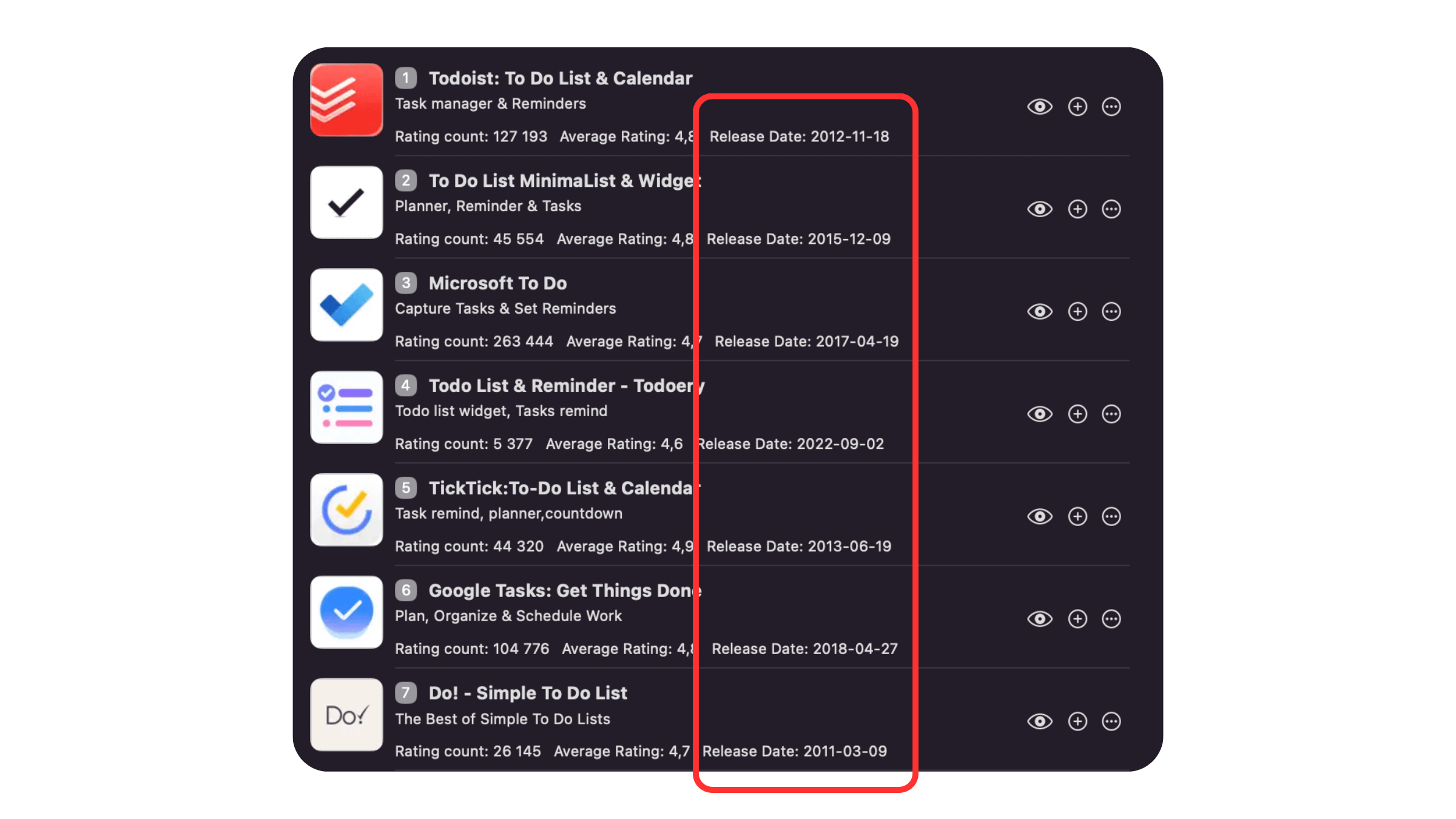
Most of them were first released 10–15 years ago. Things 3 is not on this list, but they have been on the market since 2008.
Here are a few reasons why working on one product can increase your chances of success dramatically.
Quality and attention to detail
When you have 10 projects, you simply cannot polish the interface properly. You do not have enough time, attention, or energy.
But when a product is the result of long polishing and a clear philosophy, people feel it. Users are more likely to buy something that feels like it was built with care than another template project made over a weekend.
And this is not about trendy UX or AI everywhere.
Things does not have any AI either. And if you really want to, you can find UX issues there too, even though they have always looked like complete polishing fanatics to me.
My point is simple: you should never be afraid to enter the market with your own idea. If you have your own taste, understanding, and desire to build, there is always room under the sun.
Compounding effect and loyalty
“Serial entrepreneurs” often launch a project, take the first results, and then abandon it.
But loyalty and word of mouth are built over time. They compound.
And that is not even counting the constant technical routine: bug fixes, updates for new iOS versions, adapting new frameworks, and keeping the product alive.
Focus allows you not to become a marketing circus clown shouting everywhere.
You can simply and proudly share your product, its evolution, and your growing expertise in the niche.
The technical side of promotion
Promotion takes a huge amount of time and money.
Trying to invest that into several projects at the same time as a solo maker is simply unrealistic.
Proper work includes:
Systematic ASO optimization and regular iterations
Launches on launchpads
Social media content, blog posts, and posts on niche platforms
A/B tests for creatives, paywalls, icons, and In-App Events
Paid traffic, including ASA and other channels
Summary
If you ignore all of this, what is left?
Releasing a new app every month and running to the next one, bragging about your release streak?
That is just creating dead products and hoping that one of them randomly comes back to life and turns into Elon Musk.